
Everyone needs a mentor
What is mentoring, and why bring it into schools? On collaboration between teachers and practitioners, tandem teaching and helping students become independent.
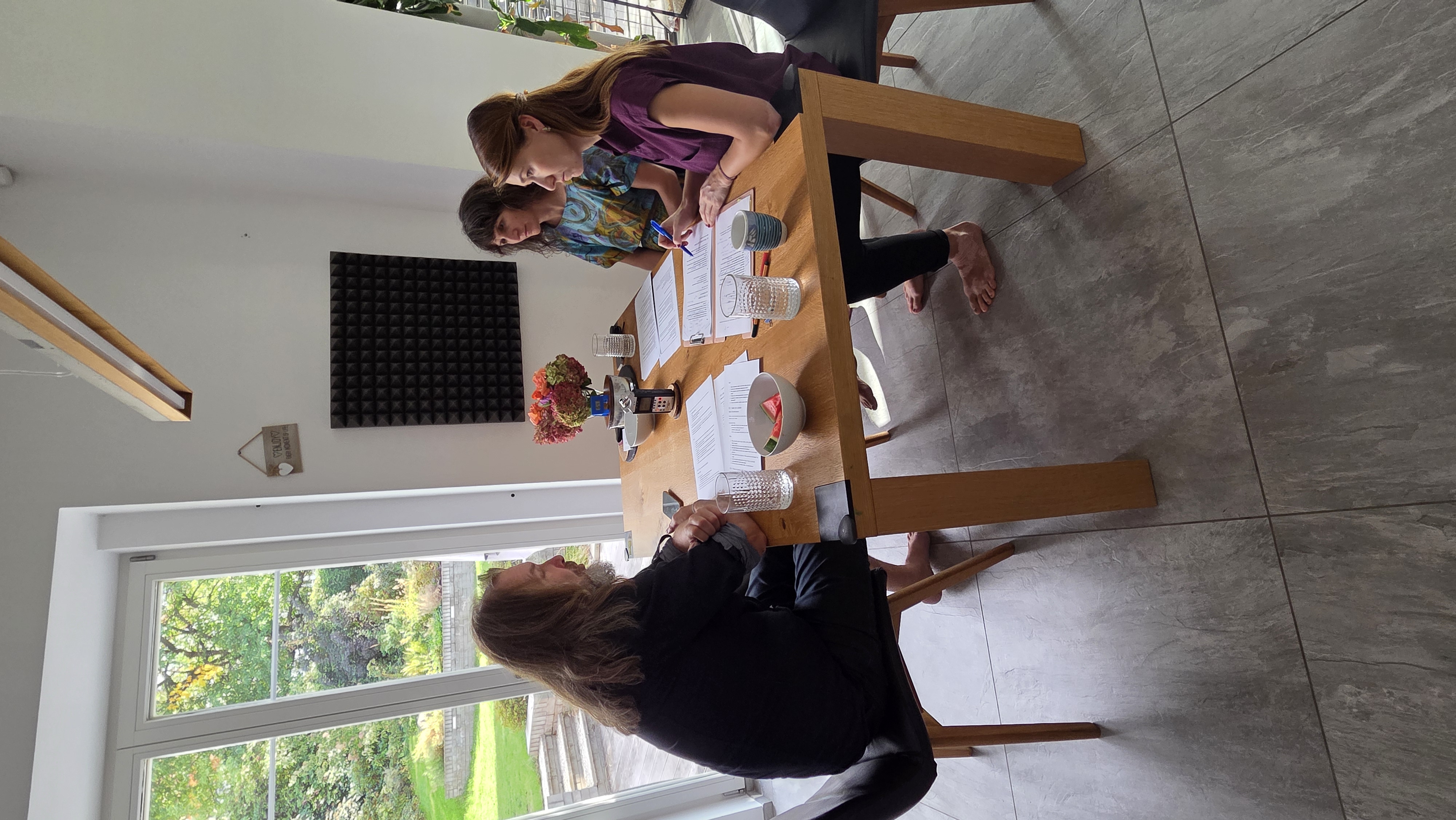
When someone from professional practice joins a classroom, what can they offer students, and how do they complement the teacher? Taťána and Tomáš describe teaching together and how their expectations of mentoring met the reality of school life. We talk about why it helps students to hear different perspectives and find their own solutions.
We also explore the differences between schools and companies, the uncertainty of those first shared lessons and specific moments when the collaboration began to benefit students. If you are considering becoming a mentor, the conversation offers a picture of what the role can look like.

Conversation transcript in English
Alice
Hi, and welcome to the Z Marsu podcast and its first series, Being a mentor at school. Today you'll hear from Taťána Beránková Císařová, a teacher and education programme designer. Táňa teaches at the Heroldovy sady business academy, where a group of teachers have built a modern lyceum programme. Alongside teaching, she connects classroom learning with business practice through Adaptivio, where she helps create development...
Collapse transcript
Alice
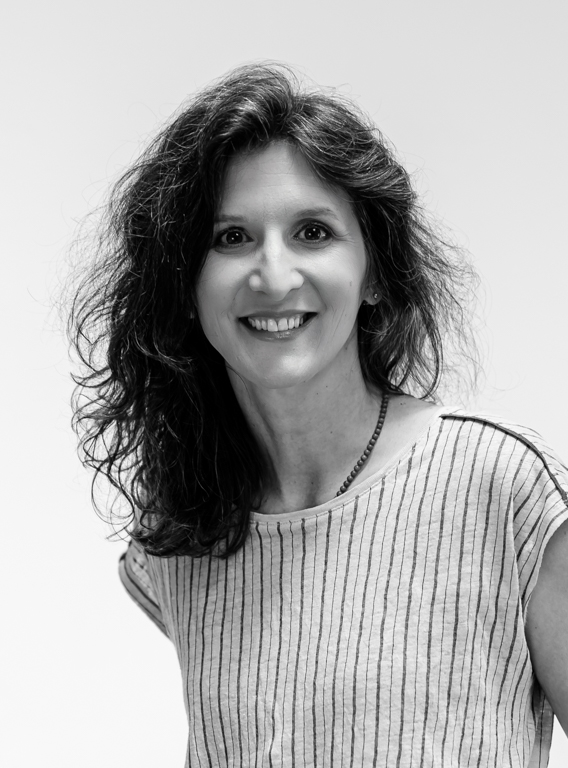
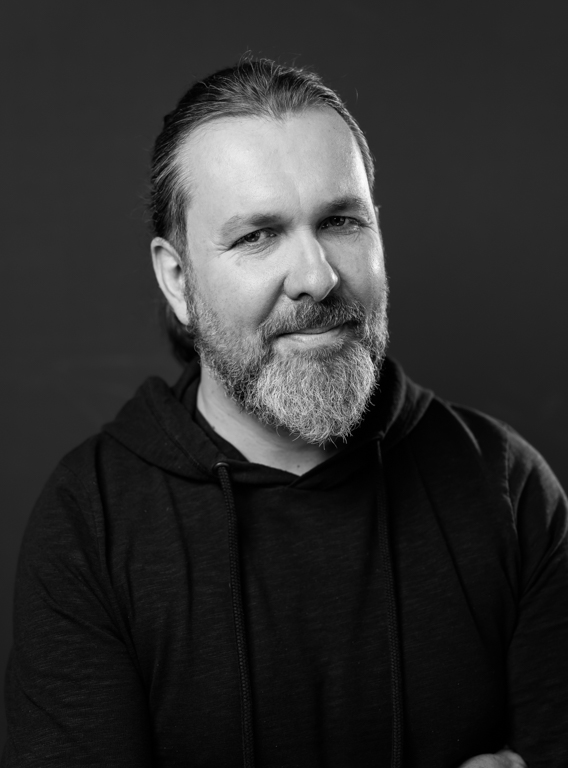
Hi, and welcome to the Z Marsu podcast and its first series, Being a mentor at school. Today you'll hear from Taťána Beránková Císařová, a teacher and education programme designer. Táňa teaches at the Heroldovy sady business academy, where a group of teachers have built a modern lyceum programme. Alongside teaching, she connects classroom learning with business practice through Adaptivio, where she helps create development programmes for students, teachers, mentors and leaders. She's an energetic, cheerful volleyball player, a mum and an amateur actress. Also at the table is Tomáš Vavrda, founder of Adaptivio. He created the Origam technology platform, helped establish Purkrabka primary school, and now helps people change the world. An entrepreneur, visionary and innovator in education. A barefoot traveller, occasional gardener and car mechanic, a dad who's still a bit of a child himself, and an enthusiastic musician. I'm Alice Budová, and I'll be your host. I'm a coach and facilitator for individuals and teams with multiple interests and talents. At Adaptivio, together with our partner JA Czech, we've put together this pilot series. We'll explore why schools need mentors in the first place and what mentors themselves can gain, because mentoring isn't just an act of charity for a school. We'll look at how to work in tune with a teacher, build relationships with students and spark their motivation. We'll also explore team dynamics and the most common tricky classroom situations. This podcast is brought to you by Adaptivio, a Czech company that helps businesses, schools and individuals change the world around them without waiting for permission. It connects business, technology and education, because good ideas rarely respect organisational boundaries. Instead of spending more time wondering whether something will work, it suggests giving it a try.
Alice
Hi, Táňa, welcome.
Taťána
Hi.
Alice
Hi, Tomáš.
Tomáš
Hi.
Alice
Today's first episode is called Everyone Needs a Mentor. We'll look at what mentoring is and why it's great to bring it into schools. Before we begin, we'll warm up with a round of quick mentoring questions. Please keep your answers short, ideally a single word or sentence. We'll do it popcorn style: whoever pops first answers. Shall we start?
Taťána
Let's.
Alice
All right. Which film or fairy-tale character would you compare a mentor to?
Taťána
I'd compare a mentor to Lotrando, who shows Zubejda the realities of everyday life. In much the same way, a mentor brings life into school for the teacher and the students.
Alice
Okay.
Tomáš
I didn't think of a character exactly, but of The Hitchhiker's Guide to the Galaxy, with its words ‘Don't Panic’ and all the wisdom about the universe it contains.
Alice
Do you prefer being a mentor or a teacher?
Taťána
For me, they're not separate things.
Tomáš
I enjoy both roles.
Alice
Who has been a good mentor or teacher in your life, and in what particular way?
Taťána
For me it was my teacher, headteacher and later employer, Michal Vích, who told me, ‘Be careful you don't actually turn into a teacher.’
Alice
And do you know what he meant?
Taťána
He meant not becoming a teacher on the inside. He said it when I was already teaching. He wanted me to stay human.
Tomáš
For me it was our form teacher at secondary school, who taught economics and let us organise things like a trade fair for practice businesses. And also my flute teacher.
Alice
Is good mentoring an innate talent, or is it a skill you can develop?
Taťána
You can definitely develop it.
Tomáš
I agree.
Alice
Let's get into it, then. Tell me, do you know the original meaning of the word mentor?
Alice
Could you explain it to us?
Taťána
I read that he was a trusted friend of King Odysseus in Homer's Odyssey. When Odysseus left for the Trojan War, he entrusted his son to him and asked him to look after him. He meant advising him, accompanying him and helping him become independent, so he could make good decisions for himself. And I think that still holds true.
Tomáš
You're right. I went to see The Odyssey yesterday, and he really was there. He even ended up dying in the course of guiding him.
Taťána
Maybe we didn't need to mention that.
Taťána
Because this is all only just beginning.
Alice
Moving from the film to real life, to school, how would you sum up the problem or challenge that bringing in mentors is meant to address, for those of us who may never have been in that position?
Taťána
I started inviting other people ‘from the real world’, as I called it then, into school because teachers devote almost all their time to students and can't keep up with everything happening beyond school. Inviting a professional to work with the students brings a breath of fresh air from outside. If the teacher can connect it all well, the children can build a fuller picture of what they're working on together.
Alice
And Táňa, as a teacher, where specifically do you see the greatest benefit of mentors and teaching together?
Taťána
For me, the greatest benefit is mentors sharing their experience with students, and also the motivation that comes from seeing what's possible. At school, our goals are framed in school terms, whereas a successful manager or entrepreneur can completely change students' sense of direction. I also see a big benefit for teachers themselves. They work with a professional and can adapt what they do with the children accordingly. They ground their teaching in reality and real problems, which is far more motivating for the children and saves the teacher the work of trying to motivate them. It also means the teacher doesn't feel like a museum piece, because they know what's happening in practice.
Alice
Great! Tomáš, if you had to sum up the role of a school mentor in three sentences or fewer, how would you put it?
Tomáš
Someone who keeps things grounded in reality. At school, reality can sometimes be distorted or invisible. And someone who offers support: a mentor has been through things, knows what they're like, and can support students in what they're doing. The mentor survived it, so they will too.
Alice
Táňa, does anything come to mind? What exactly does that role involve? How can someone who's never done it picture it?
Taťána
Sharing experience when it's needed. Drawing on their own experiences, mistakes or successes, a mentor can help a particular student at the right moment, point them in a direction and answer a question. When we speak from deep experience, the advice is completely different, and students receive it differently than when it comes from someone they know hasn't had that experience.
Tomáš
It's also about selecting from the whole context of a subject, which can be very complicated. Theory is almost limitless: you can go broader or deeper. A mentor uses their experience to choose what's important and relevant at that moment.
Taťána
For me, it's also about helping a student get their bearings at a particular moment. You do that a lot because you've experienced all sorts of situations. You're already familiar in some way with the situations students find themselves in, and you can help them understand what's happening. I'm not as seasoned, so I can't help them find their bearings quite as well.
Alice
Listening to you, I realise I may once have seen a mentor as someone who comes in to tell everyone how things are. The clever person who's been through it and is there to tell us about it. But in the benefits you're describing, I hear much more about a mentor helping me understand a problem through their own experience. It may feel enormous to me, or it may be something new. A mentor brings insight, experience and practice, without saying, ‘This is how it's done, and there's no other way.’ Have I understood that correctly?
Taťána
You have. I'm glad you put it in your own words, because you've drawn out the most important part.
Tomáš
When I came into school, I wanted to make sure that what happened there reflected reality. I felt that the process, the breadth or depth of what was being taught, or the experience itself, didn't always match the real world. Rather than telling them how things were, I wanted to make sure it worked.
Taťána
I have to add how you do that. That's where my sweat-soaked T-shirts came from at the start of our collaboration. I'd deliver a neat bit of theory and explain it nicely to the students. Then Tomáš would say, ‘Thanks. Táňa has explained the theory correctly, and now I'll tell you how it works in real life.’ And then he'd say something completely different. So it also takes courage as a teacher to have someone in the classroom with firsthand experience who will set things straight. It's great for the children. And for the teacher, actually.
Alice
So many questions are coming to mind. I'm also aware that we have several more episodes in which we'll explore this in detail. I'm really intrigued, so for now I'll just ask: are the sweat-soaked T-shirts still part of it, or can you get used to it and find your rhythm together? How does it feel now when you go in together?
Taťána
Now I look forward to it, and I know I'm not on my own. I also look forward to what I'll learn in the lesson, because things keep coming up that I don't know as well from practice. There are still situations where Tomáš's approach surprises me because it wouldn't have occurred to me. I find it inspiring, and I don't break into a sweat any more.
Alice
That's wonderful, and I want to acknowledge it. It seems to me that it puts the teacher in a very vulnerable position. It's great that you're willing to do it, and that so many other teachers are doing it too, or will be.
Taťána
I've learnt a great deal, much more than if I'd read more specialist books.
Alice
That brings me to the impact of mentoring at school. Can you recall a particular moment from teaching together that showed how it benefits students? A moment when you thought, ‘It's happening now. This is it. This is why we're here.’
Taťána
I'll start, and perhaps Tomáš can build on it. For me, it's when we come into class, explain what's going to happen and ask who needs us for what. We help students develop business projects, and they start putting their hands up. Sometimes they already say which of us they want to speak to and have questions ready. I see that as a benefit, because it's exactly what a teacher wants: for the initiative and the need to come from the children. Tomáš hasn't forced his advice on them indiscriminately. He knows how to offer it in the right doses, so demand for his help has developed naturally. But so has demand for mine. Sometimes students want a nurturing woman, which is more my role, and sometimes they want a battle-hardened warrior, which is Tomáš. So one of the signs for me is that the initiative comes from them.
Tomáš
I was happy fairly early on, when I managed to get students away from the board, out of the classroom and onto the street.
Alice
And what did you do there?
Tomáš
That was funny.
Tomáš
I think our first experiment with students out on the street was that we each gave them a hundred crowns of our own money.
Taťána
Two hundred.
Tomáš
A hundred each.
Tomáš
Each of us gave our own hundred.
Taťána
Each of us gave our own hundred.
Tomáš
They were supposed to grow that money, with the risk that it might not work. Some returned it to us and had something left over, some didn't manage it, and some spent it. From an investor's perspective, we made a loss.
Taťána
But they went out and did it. That was what mattered.
Tomáš
It was a very particular experience for them. They gave us some rather strange looks when we introduced the experiment.
Alice
As a coach, I'm naturally interested in how you reflected on the exercise afterwards. What interesting things did they learn from that? How did it help them?
Taťána
It helped them understand that our seminar would be about real life. We wanted to get them going, so they could switch from their usual school mode into our programme. It's about reality and things actually happening, rather than just talking about them. This experience was meant to get them into that quickly, and I think it worked.
Tomáš
It did.
Alice
Tomáš, before you first went into a school as a mentor, did you have any assumptions that you quickly discovered were completely wrong?
Tomáš
At school, I generally connected what I learnt wherever I could. School didn't do much to help, but my brain makes connections. I assumed more or less everyone was like that. But I was surprised by how little students could apply knowledge from different subjects in practice, sometimes hardly at all.
Alice
How would you describe in one sentence what makes a school different from a company as an environment?
Tomáš
I spent a long time trying to work that out. At the moment, I think the fundamental difference is that school is something like a testing ground. It isn't the actual race. Everything there is done ‘as if’, because that's the nature of school. Students go there to take something away from it. I think school exists precisely to prepare them for something that is still to come and isn't happening there yet. So performance in itself shouldn't be the goal of what happens at school either. We don't go there to make money so we can report a profit. We'll spend our working lives doing that in a company. At school we prepare for it and do similar things, but the purpose isn't the same as it will be in a company.
Taťána
May I? When you asked that question, I had no idea how to answer. Now it's occurred to me that there are two ways of thinking about the comparison between a school and a company. Some people see students as employees of us teachers. I think that's wrong, because they're actually our clients, and we provide an educational service. For me, a student is a customer to whom I try to offer the most meaningful learning activity possible, one that will help them develop as much as possible. That's how I see it: they're neither my colleague nor my employee.
Alice
Great! Now a question from the other end of the spectrum comes to mind. What is mentoring definitely not?
Tomáš
Managing people, pulling them along, or leadership. For me, in mentoring, the journey is the destination, so anything strongly focused on the end goal falls outside it.
Taťána
It's similar for me: not telling students how to do things, and not doing things for them either. That's the other extreme.
Alice
Táňa and Tomáš, is there anything else you'd like to add about mentoring that we haven't covered today?
Taťána
To give people a picture of what to expect and what being a mentor means, it's important to add that you usually aren't alone at school. You're generally there alongside a teacher, and that makes it a particular kind of setting. I think it's important to make clear who is doing what at any given moment.
Alice
Great! We'll come back to that in later episodes. Thank you for mentioning it. We're coming to the end now. In our first episode, Everyone Needs a Mentor, we've looked at what mentoring is and why it's great to bring it into schools. Next time we'll focus on why to become a mentor and what we mentors can gain from it too.
Closing music.