
6. Sticking points and challenging situations
What to do when a group gets stuck, someone coasts, a task becomes overwhelming or strong emotions surface. Four situations from mentoring practice.
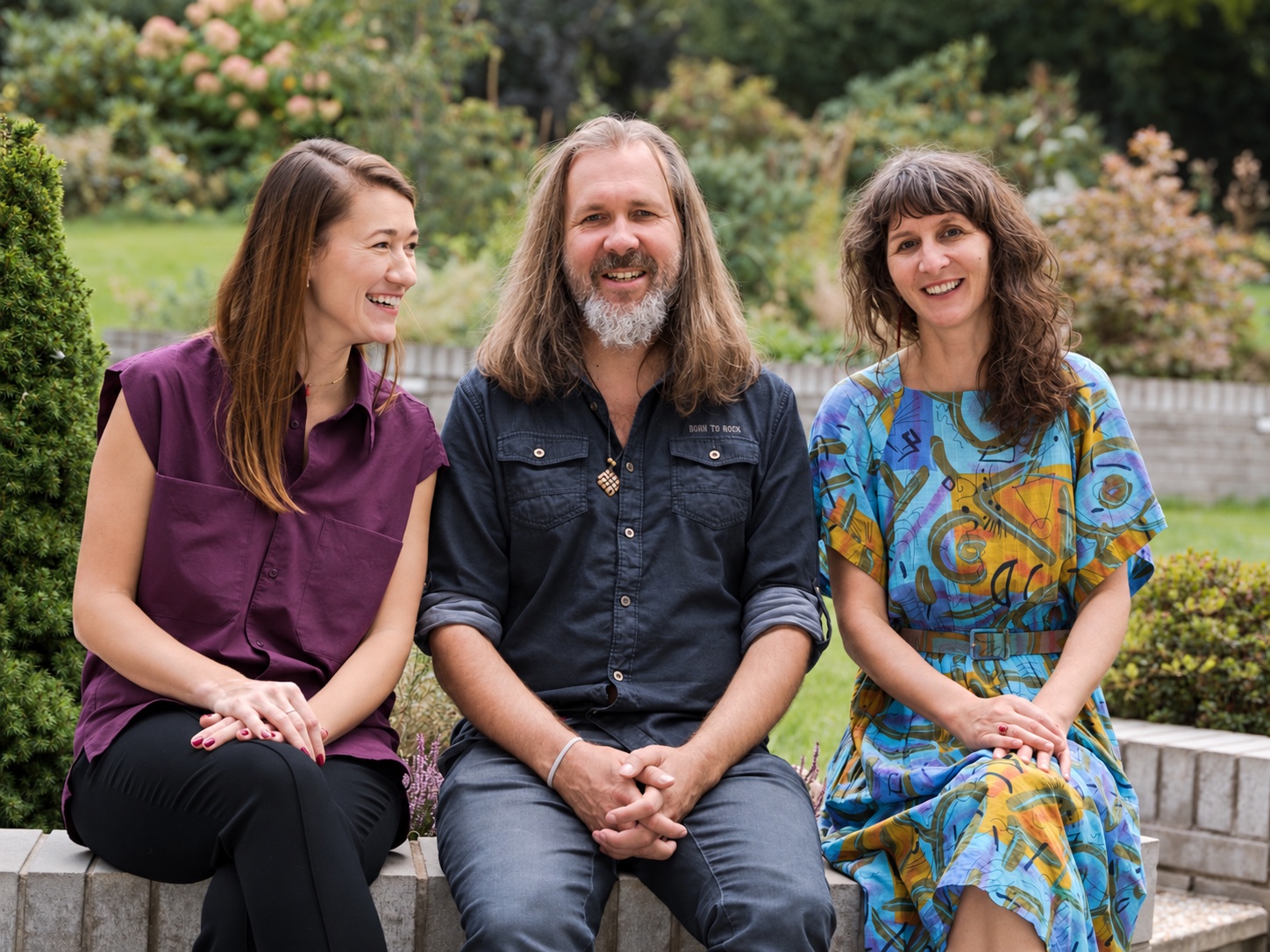
A stuck group, uneven participation, an overwhelming task and strong emotions. The final episode explores four concrete situations a mentor may encounter at school. Taťána and Tomáš share how they look for causes, support quieter students, help distribute responsibility and recognise when a goal needs to be smaller or a team reorganised.
Genuine interest, listening and a safe space are common foundations. We also discuss why emotions need room before problem-solving begins, and how adults maintain perspective themselves. The series ends with personal experiences of what helps people navigate difficult moments without facing them alone.



Conversation transcript in English
Alice
Welcome to the Z Marsu podcast and its first series, Being a mentor at school. This time our topic is sticking points and challenging situations. Today you’ll hear from Taťána Beránková Císařová, a teacher and education programme designer. Also at the table is Tomáš Vavrda, founder of Adaptivio, an entrepreneur, visionary and innovator in education. I’m Alice Budová and I’ll be your host. I’m a...
Collapse transcript
Alice
Welcome to the Z Marsu podcast and its first series, Being a mentor at school. This time our topic is sticking points and challenging situations. Today you’ll hear from Taťána Beránková Císařová, a teacher and education programme designer. Also at the table is Tomáš Vavrda, founder of Adaptivio, an entrepreneur, visionary and innovator in education. I’m Alice Budová and I’ll be your host. I’m a coach and facilitator for individuals and teams with multiple interests and talents. Together with Táňa and Tomáš, we’re recording this podcast for everyone who mentors at school or is considering it.
Hi, Alice. Hi, Tomáš. Hello, you two. Hi, Táňa. Hi, Tomáš.
Alice
Today will be slightly different. Rather than working through questions, we’ll look at specific situations that you, or mentors we’re in touch with, encounter most often. They can be complicated, stuck or confusing, and don’t work out as we imagined. We’ll explore these scenarios and you’ll share tips and experiences that have worked for you. Before we start, here are our quick mentoring questions.
Alice
Cry or laugh?
Taťána
Definitely express emotions.
Tomáš
I agree. That isn’t entirely common at school.
Alice
Can you think of something a student might say that would definitely leave you speechless?
Taťána
When, after two months of work, they ask, ‘When are we going to start a business?’ Even though they’ve already been doing it for two months.
Tomáš
I’m certainly taken aback when they come and tell us what they found valuable about our work.
Alice
When they praise you.
Tomáš
When they praise me.
Alice
Before we begin, Tomáš, could you briefly describe the most common forms of collaboration or ways a mentor can contribute at school?
Tomáš
It ranges from short visits for various purposes: feedback on a project, an expert coming to talk about their work or offering inspiration through their own story. From one- or two-hour visits, through special contributions such as judging a competition, assessing projects and giving feedback, to longer-term collaboration. A mentor can guide a project or take part in tandem teaching, working alongside a teacher throughout the year.
Alice
We have several concrete situations to explore. I’ll introduce each one, and you can take turns offering suggestions. First situation: the group is stuck and doesn’t know how to move forward. Students aren’t communicating, there’s an awkward silence when you enter the classroom, they aren’t sitting together and aren’t delivering their work. What do you do?
Tomáš
Why is it stuck?
Taťána
It helps to understand what they are experiencing: perhaps they have just had a maths test or are about to take one. Ask, ‘How are you? What’s ahead of you today? What have you experienced?’ An emotional thermometer or a thumbs-up or thumbs-down can help them show how they feel. I need to know whether it is tiredness or a strong emotion. Then respond accordingly, suggest goals for the lesson and invite them to adjust them or propose something else. If that doesn’t help and the group remains silent, turn to the particular quiet teams and simply ask, ‘What’s happening? What are you doing? What have you done?’ Something always emerges.
Tomáš
We had a group like that recently. They had always been quiet, which made it confusing, but now the results had stopped too. I asked what was happening and they shrugged. Almost casually, I said, ‘You look tired. Is it because it’s Friday?’ They said yes, but I kept wondering and asked more questions. Suddenly a big problem came out. They started saying they were very angry, not with each other but about an external situation, and couldn’t see how to resolve it. They opened up, but they had been right on the edge of whether they would want to share it.
Taťána
You can’t simply carry on with your plan and hope it gets them moving. That usually doesn’t happen. Being able to talk about it can itself free up the capacity to start something. If it is more complicated, we need to address it before moving on to more work.
Alice
Second situation: someone is coasting and doing nothing, while a leading person has everything under control. These roles or subgroups drift further apart and complain about one another: ‘They didn’t turn up; they didn’t bring it again.’ The leader versus the passive rest of the group.
Taťána
Prevention matters. If students are going to cooperate over time, genuinely depend on one another and share a goal, I need to prepare them. It isn’t a given that they can do that in any combination. First they get to know themselves and each other in different situations and experience different roles. This does happen at school, but they might not remember it, so it is useful to include an activity like that. It signals that every member matters.
Taťána
My second suggestion is to choose carefully how teams are formed. Building them around friendships and established classroom patterns isn’t always best. We try to mix them up, as I say, like spaghetti. After a few lessons, the original patterns may barely be visible. We encourage teams to form around content and topics that interest students rather than the people in a group. But that requires a more mature group and time to experience working together in different situations.
Tomáš
As a mentor, I often can’t influence that. I arrive to find an existing team already working in a particular way. I can notice patterns and know approaches, not so much solve things for them as name them and let them find a solution. At least in the later years of secondary school, they are surprisingly independent in this respect. Friends forming a team can be a useful experience. Let them try rather than saying, ‘Don’t do it.’ They wouldn’t listen anyway. Sometimes it works; sometimes they fail. Then we can analyse it safely and help them find the cause.
Tomáš
For example: ‘Working together is difficult because you also want to go out together after school.’ And they say, ‘Exactly.’ ‘That’s hard, isn’t it?’ ‘It’s awful: working with someone on something serious while also wanting to keep a completely relaxed friendship. Tensions arise and we don’t know what to do.’
Taťána
What else can support this? These are longer-term processes, and sometimes they work better than at other times. It is good when students find their own way, but sometimes they don’t even know the tools for involving everyone. The more active people take things on because they want them done or feel more responsible. The more passive ones are happy for someone else to handle it.
Taťána
What works for me is teaching groups to record what they are doing, who is responsible and when it should be finished. They can see what the work involves and how it breaks down. After a while, they divide up roles and know exactly which activities belong to each one. They can then give one another useful feedback. It is important to sit down regularly and, using that record, discuss how everyone is working rather than trying to invent an answer on the spot. The strategy is for everyone to be visible in the team, with clear responsibilities agreed and recorded in advance.
Tomáš
They start intuitively, but we need to offer timely prompts for reorganising the work. At first, everyone in a team tends to do everything. Each person takes on what they are good at, and everyone has some tendency to lead. Let them do that for a while, then say, ‘You can see it’s becoming too much. What if you divided it into roles?’ Help them find those roles and reorganise the work.
Taťána
Another situation comes to mind: someone may seem to be coasting because they are shy or lack confidence. They fear that the bolder, informal leaders won’t value their ideas or the quality of their work. We need to notice and support that person too. It often helps to connect them with the rest of the group and help them present their ideas or work. The others frequently say, ‘That’s a good idea; why didn’t they tell us or show us?’ Here we need to give a gentle nudge and some protection.
Alice
Third situation: the task is beyond the students’ or group’s capacity. The team has become overwhelmed. There is too much to do, and panic sets in. They have the energy and willingness, but don’t know how to get their bearings or what to do next.
Tomáš
As with everything, we need to look for the reasons. Did they set themselves too large a goal? Then it helps to make it smaller or bring in someone else. We need to take things step by step; Rome wasn’t built in a day. This is part of their learning: they took on too much, so help them lower the bar.
Tomáš
One thing that may not be intuitive in schools is that a team’s composition doesn’t have to be final. Someone might not have enough room in one team but could help another that lacks the capacity to achieve its goal. It is fine to say, ‘Change teams.’ That reflects real life. If a job doesn’t suit you, you can choose another. You don’t have to stay somewhere simply because you were placed there.
Taťána
A simple thing also comes to mind. When they first experienced being overwhelmed because they cared about the work, we helped them organise their time. They finally understood the purpose of a diary and began planning activities consciously so everything fitted together. That was another of our interventions.
Alice
The fourth and final situation: strong emotions. I enter the classroom and sense that something is happening, perhaps nonverbally. Someone is red in the face, someone makes barbed remarks, someone takes us aside to tell us about a problem. What do we do?
Tomáš
For me, the foundation is noticing it at all and being aware of what is happening. In my view, that is half the problem solved. It is worse when we push ahead despite those situations.
Taťána
It is a difficult situation. For me, the foundation is believing their emotions. They are a genuine expression, even if only part relates to our activity and the rest has another cause. What works best for me is helping emotions surface without becoming a geyser: allowing students to express them without feeling embarrassed. Gently drawing them out. Sometimes they flow; sometimes they don’t. Only then do I feel there is room to address something with them.
Taťána
Create calm and safety, open up the space, let the emotions out and stay present. Don’t take sides, because we don’t understand everything that happened; simply hold the space. Then let them recover a little and settle. They are then ready to address the causes and look for solutions together. Don’t say, ‘What are you doing? Why are you behaving like that?’ And don’t immediately push: ‘Let’s stop this; it’s going nowhere. We’ll decide who does what, and that’s that.’ It wouldn’t be well received.
Taťána
You really never know what situation you’ll find yourself in. Secondary-school students in particular have a lot of emotions, and I think they need support and the opportunity to experience them.
Alice
Thank you; those were interesting situations. I noted some common themes. You repeatedly mentioned finding out why: what lies behind a situation and how we got there. That has a significant effect on what to do next. Help name it, let something out and listen. You also bring specific rules, principles and tools, such as organising work, delegating and giving feedback. I heard encouragement: ‘It’s okay; it’s a process,’ giving students energy and courage. And nothing is final. We put something into practice, try it, evaluate it and perhaps reorganise it again. It is a living organism moving forward.
Alice
We’re coming to the end of Sticking points and challenging situations. One final brief question for both of you: what helps you personally handle these situations with perspective rather than being overwhelmed? Do you have a recommendation?
Taťána
It helps me to remember why I do this: so they can encounter these situations, learn to navigate them and I can be their guide. While it is happening, I’m very present and dealing with it alongside them. Afterwards, talking with Tomáš and asking what happened helps. Coming back to the surface is healing for me: we ground it and talk professionally about what probably happened.
Tomáš
It helps me to realise that these situations affect me just as they affect them. I can show them how I deal with them. In a way, that is easy, because I draw entirely on my own experience and don’t need to have studied anything extra.
Alice
Great, that’s all for this episode. We’ve reached the end; thank you very much, Táňa and Tomáš.
Thank you. Thanks.
Alice
I’d like to thank you for listening, and above all for changing the world around you for the better through mentoring students.
Alice
This podcast is brought to you by Adaptivio, a Czech company that helps businesses, schools and individuals change the world around them without waiting for permission. It connects business, technology and education, because good ideas rarely respect organisational boundaries. Instead of spending more time wondering whether something will work, it suggests giving it a try.