
5. Team dynamics
How to read classroom relationships, recognise stages of team development and help students navigate conflict. On leadership, collaboration and learning from experience.
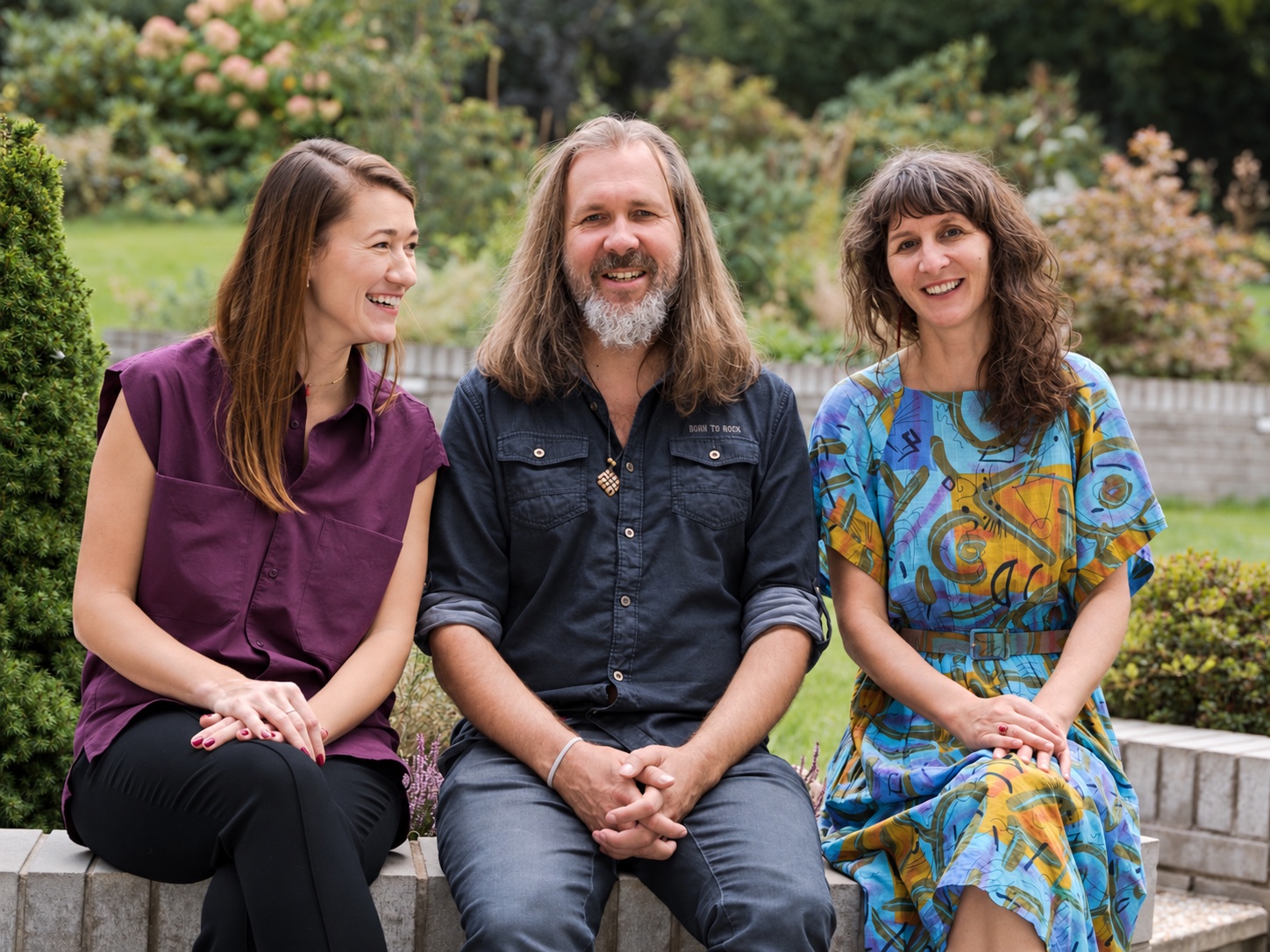
A class is more than a collection of individuals. Who speaks for it, who stays on the margins and what happens when a team gets stuck? Taťána, Tomáš and Alice explore forming a team, storming, establishing norms and the moment collaboration begins to work. Examples from student projects show why the strongest driving force is not always the most suitable leader.
The conversation also looks at intervening in team relationships: listening first, helping name the situation and sharing personal experience. Time and joint reflection matter, allowing students to take what they have learned into their next project.



Conversation transcript in English
Alice
Hi, and welcome to the Z Marsu podcast and its first series, Being a mentor at school. This time our topic is team dynamics. Today you’ll hear from Taťána Beránková Císařová, a teacher and education programme designer. Also at the table is Tomáš Vavrda, founder of Adaptivio, an entrepreneur, visionary and innovator in education. I’m Alice Budová and I’ll be your host. I’m a coach...
Collapse transcript
Alice
Hi, and welcome to the Z Marsu podcast and its first series, Being a mentor at school. This time our topic is team dynamics. Today you’ll hear from Taťána Beránková Císařová, a teacher and education programme designer. Also at the table is Tomáš Vavrda, founder of Adaptivio, an entrepreneur, visionary and innovator in education. I’m Alice Budová and I’ll be your host. I’m a coach and facilitator for individuals and teams with multiple interests and talents. Together with Táňa and Tomáš, we’re recording this podcast for everyone who mentors at school or is considering it.
Alice
Hi, Táňa.
Taťána
Hi, Alice.
Alice
Hi, Tomáš.
Tomáš
Hi.
Alice
How are you?
Good.
Alice
Today’s topic is team dynamics. Last time we discussed getting to know students and building a good relationship with them. But we were still talking about individuals. Today we add another dimension: a group of individual personalities with relationships, connections and dynamics between them. We’ll discuss how to recognise what is happening, handle it and work with it. Before we start, let’s have our quick mentoring questions.
Alice
Carrot or stick?
I would definitely favour intrinsic motivation. Carrot and stick seem to me to be based on external motivation.
I agree. I don’t find either particularly constructive for learning.
Alice
How do you know a team is working well?
Tomáš
Generally, by whether it is managing to achieve the goal it set itself. At school, it probably won’t work well, but that is part of the learning.
Taťána
For me, it’s when I enter the classroom and they barely notice because they are already discussing something and working on it. They aren’t waiting for me to say, ‘Now you should start working.’
Alice
Have an argument or sweep it under the carpet?
Tomáš
Neither would be my first choice, arguing would be second and sweeping it under the carpet third. But we are human, all these things happen, and I think we need to be tolerant of that.
Taťána
I would need the option ‘bring it out into the open without arguing’. Being able to talk it through and learning how to do that.
Alice
When working with team dynamics as a teacher–mentor pair, we need to distinguish individual situations and relationships between students from a pattern emerging across the group. We’re talking about the dynamics of the whole team in the context of a goal or project. We don’t want to get stuck on Jarda being annoyed with Maruška or someone having slept badly. We’re looking at how to work with the team as a whole. What can we notice when we enter the classroom? Which signs of team dynamics do you see most often?
Taťána
We won’t see the more complex relationships at first glance. But we can get our bearings from who sits with whom and how they sit. There will probably be connections and perhaps established patterns. We can also observe who matters to the class: who speaks for them or whom most of the class look at when I’m saying something.
Taťána
Sometimes you can tell which way the wind is blowing without anyone speaking. Sometimes it’s harder, but usually you can tell.
Taťána
We can’t understand thirty people and the map of their relationships at first glance. If I want to work with them in groups, it helps to use games and activities that let me read the relationships more clearly. I get to know the terrain before starting work that carries more responsibility.
Taťána
I think it is important for both teacher and mentor to notice the extremes at first: very enthusiastic people who can motivate others, those on the margins whom we want to involve, and those behaving disruptively. That doesn’t mean they are inherently disruptive people, but it helps to keep an eye on that behaviour.
Tomáš
One very interesting experience comes to mind. A team formed that was really driven to move its project forward. After a while, though, there was a strange tension. There was a young woman who was a leading personality, the prototype of an energetic manager. Then two or three other people working hard, and the rest doing almost nothing. They felt it wasn’t working. She herself suggested, ‘Perhaps I’m not the right leader for you.’ They chose someone else from within the group and she stepped back. I don’t know exactly, but perhaps her drive was too strong and everything would have followed her lead. They elected someone else and things settled into place.
Alice
That sounds interesting. In seeking a sustainable way for a team to work, it’s a useful experiment: the person with the most energy isn’t always the right fit for a particular position. What stages does a team go through? What dynamics does it experience, and what common steps can we identify when we take a wider view?
Taťána
According to the general theory of group dynamics, which applies to all teams, not just school teams, the first stage is forming. Teams are coming together for the first time, and that is not straightforward: an individual becomes part of a smaller unit. It isn’t easy, because at this stage everyone’s needs are largely focused on themselves. It is important to build a sense of safety in the new group.
Taťána
In the next stage, people start defining their positions in the team. A struggle over hierarchy and status begins. If there is already a leader, resistance may develop: ‘I don’t agree with them.’ This stage is called storming. If the team moves through it successfully, a sense of ‘we’ starts to emerge, along with group norms: our rules and ways of dealing with situations. We know how different people tend to behave.
Taťána
If we also work through establishing those rules well, we reach the performing stage. The team runs like a well-tuned instrument or car. There is less need to intervene or supervise; doing so might even be harmful. All the stages need reflection so students can learn what they have been through and understand that it wasn’t just chance.
Alice
I’ve always found it helpful to realise that each stage is natural. People arguing, misunderstanding one another and defining their space is part of the process. If it didn’t happen, perhaps it would only surface later. It can also be a form of small-scale diagnosis for me. Stages change, and we may return to one, for example when two new students join. When I enter a new group, I can discuss with the teacher or my tandem partner which stage they might be at. From the relationships and how long they’ve known one another, we can try to understand what is happening. Then we can adapt the activities: do they need to get to know one another better, or tools for feedback and dividing up the work?
Taťána
I see one marked difference compared with companies: emotional experience. Students may feel everything more intensely. We need to stay grounded and guide them through it rather than getting carried away with them. We need to understand that it is natural and help them move through the stage. They would probably get through it on their own too, but it might take much longer. When a project has a time limit, intervention matters so they don’t spend too long struggling and can move forward.
Tomáš
As a mentor, I need to know whether they are already learning about this elsewhere, know the theory and discuss it with their teacher. Then I only need to recognise their stage and respect it. Or perhaps part of my contribution is to help them understand what is happening and learn something about it.
Alice
I’d like a concrete example. Can you remember a situation that surprised or alarmed you, but then you thought, ‘Now it makes sense: this is the stage they’re at, and we’ll proceed accordingly’?
Tomáš
Let me remind listeners that Táňa and I mainly teach entrepreneurship. Students develop their own projects and learn to start something themselves that they might eventually earn money from. Every year, at least one team comes and says, ‘We don’t know what to do next; we’ve fallen apart as a team.’ They are surprisingly prepared and able to describe the problem. Or half a team comes: ‘We have a big problem with the other half, but we’re friends and don’t know what to do.’ This happens every year.
Taťána
A common problem is that the person with the idea, the visionary, becomes frustrated that the others don’t live and breathe the project as they do. They start realising the work ahead: they will have to motivate the others, and they have never done that before. I see a big role for teacher and mentor here: helping them accept leadership, including the fact that it sets them slightly apart and the others aren’t following exactly the same path.
Taťána
I recognise that from many teams I’ve worked with. The leader was annoyed that the others didn’t feel the same way, while they felt insufficiently appreciated. They were completing tasks but didn’t feel the same passion as the founder who brought the idea.
Tomáš
I know that frustration from everyday practice, including my own experience.
Alice
That was exactly what I was thinking. I imagine any leader in any setting can relate. Thank you for that parallel. What does your intervention actually look like? You see something happening: the leader is struggling and the others feel unappreciated. What do you do? Address it individually, within the team, take someone aside or speak to the whole class? How do you handle it in practice?
Taťána
The most important thing is to understand the situation thoroughly through conversations and listening. The students describe it, and we assess what the problem might be. We choose an intervention accordingly. I often feel like a mediator: after understanding the situation, I bring people into a joint discussion and help them understand one another. If I rephrase something, they may understand it better and don’t have the same emotional response to me as to the other person. Simply clearing the air, naming things and talking them through helps. Then we look for a solution together. I can suggest one, but ideally they come up with it themselves.
Taťána
It also often helps them to realise that this is normal. It doesn’t mean there is something wrong with them: they are learning to work as a team, and these things happen. That alone can calm the situation.
Taťána
Does anything come to mind, Tomáš?
Tomáš
This is probably where I’m strongest. When I say, ‘I experience this three times a year,’ and give an example, it reassures them. I listen to the group and tell them what happened to me and the different ways I handled it with different people. They thank me, then come back a week later saying, ‘We’ve reached an agreement.’ I just look at them and say, ‘Well done.’ We hardly had to do anything.
Tomáš
What I don’t think works is a centralised, lecture-style approach. The students know one another and are usually friends. The class acts as a large unit in relation to the one or two adults. However much we present ourselves as being with them, we are slightly outside. The class tends to protect itself, as does a team. Even when there is hostility between them, we are still outsiders. Talking down to them doesn’t work because of that barrier. Ultimately, an individual also protects their own integrity. Being someone who shares their own perspective and experience is extremely useful to me, and perhaps the most I can do as a mentor.
Alice
I’m taking away several points. First, ask questions and listen. Second, acknowledge what they feel and what is happening, and put it in a normal context: these things happen. Then offer a practical example: ‘This happens to me too; this is how I handled it.’ That brings understanding. I can help look for a solution, but the team and class have their own mechanisms, may not even need us and might find the best way themselves.
Tomáš
I think they might not even let us into that process.
Alice
Great.
Taťána
I just want to say that all this takes time, and we need to allow for it. I used to feel frustrated that we weren’t working or progressing according to plan. But these issues aren’t peripheral. They are one of the main things happening in group work. Tasks and programmes are often designed precisely so that students work in groups. Teamwork isn’t just a format for me; it is often the main learning activity. I’ve accepted that progress can be slow because we need to stop and resolve something before they can move to the next stage.
Tomáš
That too is a crucial experience, because that is exactly how real life works. We form a team and say, ‘We’ll have this done in a month.’ Halfway through, everything gets stuck, we have nothing and we’re back at square one. That is the reality of every project we do.
Taťána
I’m glad you said experience, because simply going through it wouldn’t be enough. It is important to reflect on it with them, return to it regularly before they forget, and describe what happened. They often look as if they had never been there. Bringing situations back and naming them can turn an event into something they have learned from. Next time they might know what to do without help. Without reflection, it would remain just an event, and next time they could go through it again without knowing how to respond.
Alice
Great. Tuckman describes this as the fifth stage of team development: adjourning, when a project closes and we reflect on what happened. Thank you. A brief final question: what is your favourite stage of team development?
Taťána
It matters to me that teams ideally reach the final stage, because that is how they learn the most. But if I have to say what I enjoy most, it’s forming.
Tomáš
I don’t know if I enjoy it, but I find the stage where things get stuck and they discover that working together isn’t going well the most useful. They learn how important it is to deal with it early, before problems pile up and resolving them costs a lot of energy or money.
Alice
That’s all for today. Next time we’ll look at common sticking points, challenging situations and questions from mentors and teachers, and how to respond to them. Thank you, bye.
Bye, thank you. Thanks, bye.
Alice
This podcast is brought to you by Adaptivio, a Czech company that helps businesses, schools and individuals change the world around them without waiting for permission. It connects business, technology and education, because good ideas rarely respect organisational boundaries. Instead of spending more time wondering whether something will work, it suggests giving it a try.