
How to motivate students
How to build trust, encourage student responsibility and learn from mistakes. Practical experiences with motivation and meeting a class for the first time.
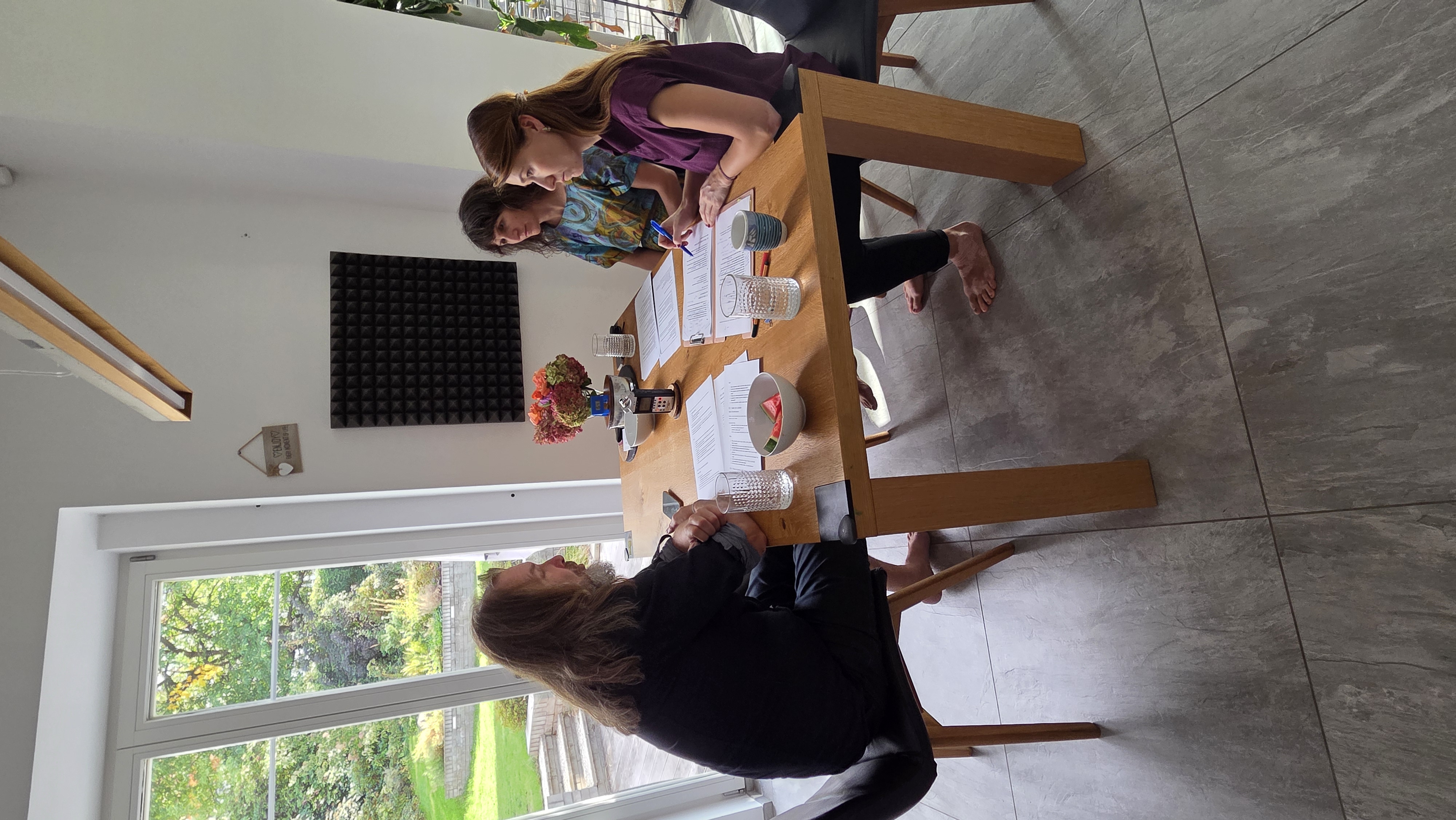
How do you get started with a class you do not yet know and earn the students’ trust? From the first introductions, we move on to what helps students get involved and take responsibility for their work. Taťána and Tomáš discuss genuine interest, making the purpose of tasks clear and the example adults set through their own collaboration.
Much of the conversation focuses on mistakes and creating an environment where students feel able to try things. We explore when to explain, when to ask questions and when to let students learn through experience. We also discuss what to avoid at the first meeting and how to recognise that the class is beginning to feel safe.



Conversation transcript in English
Alice
Hi, and welcome to the Z Marsu podcast and its first series, Being a mentor at school. This time we're discussing How to Motivate Students. Once again, you'll hear from Taťána Beránková Císařová, a teacher and education programme designer. Also at the table is Tomáš Vavrda, founder of Adaptivio, entrepreneur, visionary and innovator in education. I'm Alice Budová, and I'll be your host. I'm a...
Collapse transcript
Alice
Hi, and welcome to the Z Marsu podcast and its first series, Being a mentor at school. This time we're discussing How to Motivate Students. Once again, you'll hear from Taťána Beránková Císařová, a teacher and education programme designer. Also at the table is Tomáš Vavrda, founder of Adaptivio, entrepreneur, visionary and innovator in education. I'm Alice Budová, and I'll be your host. I'm a coach and facilitator for individuals and teams with multiple interests and talents. Together with Táňa and Tomáš, we're recording this podcast for anyone who mentors at school or is thinking about it.
Alice
Hi, Táňa.
Taťána
Hi, Alice.
Alice
Hi, Tomáš.
Tomáš
Hi.
Alice
Today, let's look at how to get started with students: how to tune in, make contact and gain their trust so you can work well together. We already know that you're in tune as a mentor and teacher, what lies ahead and what the goal is. So how do you begin?
Alice
Quick mentoring questions. Informal or formal forms of address?
Taťána
I'd start with formal address at school. It depends on the setting, but formal address is usually used.
Tomáš
I'd prefer informal address, but it doesn't really work out for me.
Alice
How should I address the students?
Taťána
Using their first names is certainly nice.
Tomáš
Same here.
Alice
Can you remember all those names? Is it even possible?
Taťána
Fortunately, I can remember them. At the beginning, it sometimes helps if students stick their name onto their T-shirt, on a piece of tape, for example.
Tomáš
Remembering thirty people is a nightmare for me. I really struggle with it and need some aids.
Alice
What should you wear?
Taťána
Comfortable clothes you feel yourself in. I always suggest something loose, because you might get sweaty.
Tomáš
I'd say something that feels authentic to you. But we once had a visiting mentor who came in tracksuit bottoms, and I don't think that quite worked for the students.
Alice
Shoes or no shoes?
Tomáš
No shoes.
Taťána
Yes.
Alice
How are you?
Alice
Yes.
Alice
That's excellent.
Alice
Táňa, could you start by telling us about motivation? How does it work? Can students be motivated?
Taťána
That's not an entirely easy question to start with, but let's get into it. It's best when children become enthusiastic about something from within. They want to do it, and you don't have to use external incentives such as rewards and punishments. That's putting it simply. But how do you achieve it? The recommendation is to start with something simple, so students can experience success. That isn't just something we've made up; it comes from the literature on motivation. It's good to start with a game or simple questions, so they know they can succeed in that area.
Taťána
The second principle is to do some things consistently. For example, start and end lessons in the same way. That makes things predictable, and we don't have to waste time explaining new methods and approaches all the time. At the start, a mentor can ask a few questions about what students have done and how they got on with the tasks from last time. At the end, they can summarise what they've done today and what they want to do next time. Even these two simple, recurring practices help children find their bearings, so they don't spend their energy trying to understand different approaches and methods.
Taťána
Then it's good to set firm working rules that matter to both the class and the mentor. There shouldn't be too many; I'd suggest perhaps three. You need to uphold them consistently so the children know they apply. They might concern group work, for example, and should support a safe classroom environment. Some of ours are: ‘When someone is speaking, I give them my full attention.’ ‘When I ask a question, I look at the person I'm asking.’ ‘I don't eat during lessons.’ The rules should respond to what's happening in class and what's preventing students from concentrating or working together.
Taťána
The final principle is one of the most important for us: students should take ownership of what they're working on. They should be able to help decide as many things as possible, and so feel responsible for them. For example, it's good to agree in advance on how decisions or votes will be handled, so they know how it will work.
Alice
Thank you. I see lots of parallels with adult life, interpersonal communication and working with teams in companies. The theme of motivation resonates with me: how to encourage people to want to do things themselves, rather than being forced to be there or needing us to steer them into something. Tomáš, what useful things do you bring into school from your experience in business? How do you encourage or stimulate students so they enjoy it and feel interested? Is there anything you'd add?
Tomáš
You can't. I can want someone to want something, but I can't make them actually want it. That's a contradiction in itself. When someone wants something, it comes from within, and no one can talk them into it. The only way I know to deal with that is to create an environment where that desire may or may not emerge. This is precisely where experience of both settings helps me: I take some things from school into the company and some from the company into school. It's important to me that people remain human.
Tomáš
What Táňa described are the usual rules we all pay attention to. But if they remain just rules, it becomes too mechanical: rule one, rule two, this method and that one. We give each other attention because we want to notice and understand one another. That's what creates good energy and good work. A technique can remind us, but what matters is real interest in what a student is doing, what they're working on and whether they're enjoying it. If not, what's the problem? Maybe the topic isn't right for them, or they don't feel well today. It could be a thousand things. Let's investigate, ask or observe. That way we're giving them real attention, and that's what makes it work. Simply watching them intently is no substitute for caring about them.
Tomáš
So it depends on the environment we create and whether students feel comfortable in it. For example, we've just decided to hold the first lesson at our offices instead of at school. You could see that it gave the students a completely different energy. They said themselves that, instead of sitting at school desks, we were around a round table and it felt as though something was really starting to happen. I hope that will give them the desire to get involved. But the only thing I could do was create the environment. The rest is up to them.
Alice
I hear several things in that. I'll highlight some and perhaps add what I use myself. First, trying to understand and showing interest. Seeing that the interest is real and the question isn't just a formality can be a powerful stimulus for anyone. Second, setting an example: how we communicate as a pair, reflect on ourselves and our work, show kindness and pay attention to each other. Students and young people learn most by imitation.
Alice
Two more points occurred to me. The first is to explain why something could be useful to them and why we're asking them to do it, so it isn't just an instruction. Simply sitting in school can make someone feel, ‘They're asking me to do something again.’ Yet it has a purpose within the whole process. That connects to the second point: looking at the shared goal. Where will this take us, what will it bring us, and what can we take away as a team or class, or into other relationships and life? Do you agree?
Taťána
I do.
Taťána
You've already partly answered that, and the benefit is clear. I think it's important to say that students don't yet know how to do these things. A mentor may go into school expecting thirty young people who can manage them. But that isn't the case. Perhaps that feeling also comes from being outnumbered: they're on home ground, and I'm arriving as a guest. It's important to realise that, with a mentor, they may encounter a completely different kind of learning from what they're used to. They're developing in a different way and are only just learning how. That's exactly why they're at school, and a mentor can contribute a great deal to their development.
Taťána
The second important point relates to the rules and everything else we've mentioned. For a mentor's visit to have the greatest impact, the children need to accept the mentor on a personal level. Then they'll take more from the advice, direction and guidance than if they see the mentor as an outside presence doing something there.
Tomáš
That makes me think: explaining why, as you said, is a very rational approach, and it's used a lot. But because a mentor is a different presence in the classroom, they can use a strength of their own: their energy. Sometimes they don't need to explain. They start doing something, and the students follow, if it's authentic.
Alice
Táňa, you mentioned a safe environment. Tomáš, you're talking about a comfortable environment that we create so students can learn and feel motivated. Could you briefly pick out a few principles you use to make the classroom feel safe?
Tomáš
I don't think the environment necessarily has to be comfortable. Safety comes from different things, such as my confidence. Even if a situation doesn't feel safe or pleasant, I can act with assurance, trust myself and the students, and behave as though it's an ordinary situation. That signals that we'll manage it together. That's one approach: not seeming rattled and not signalling in advance that they won't manage and things will go badly.
Taťána
For me, it also comes from the principles I mentioned at the start. Don't begin with difficult tasks, so students aren't immediately afraid they won't cope. Break the work into gradual steps and give feedback often enough for them to adjust their approach and reach the goal. Use mistakes as prompts to look for another way, and allow enough time to reflect on them. Don't keep pushing students forward; look back with them, help them get used to doing that and understand their own approaches. The rules I consistently return to matter too. They don't yet know how to coordinate well in a large group and need help. When I see something disruptive or potentially hurtful, I don't let it pass.
Tomáš
Trust matters, and it's built gradually. If we jump into an abyss right at the start, we may all survive, but they'll expect another horror next time. We need to take it in small steps, so they discover that we mean well even when the tasks are hard. The pacing Táňa described helps. After a while, they trust that even if we're entering something uncomfortable, there's probably a point to it and it's worth trying.
Alice
I'm particularly interested in making mistakes. In myself and in the adults I work with, I often notice a deeply rooted idea that a mistake is a problem we should be ashamed of and avoid. I'm glad to hear we can help younger people avoid that assumption. Every mistake is something I can learn from. We can't do without mistakes. That's really good.
Alice
We're talking about mentoring, but it strikes me that you can't completely separate it from other techniques. Mentoring isn't always enough. Sometimes you need to explain something, say how it works or provide a foundation. Could you briefly explain the differences between teaching, mentoring and coaching? And how do you know which technique to use when?
Taťána
For me, they overlap. I can no longer see teaching as separate from mentoring, coaching and guiding, because those techniques have become such a big part of it. Teaching doesn't mean standing at the front and delivering something to the class. Depending on the problem, I choose both how to work with the class and the appropriate role for myself.
Taťána
For me, mentoring is when I act as an expert. I understand something, have experience with it and can offer advice at the right moment. I also use coaching in areas I don't know much about, where that knowledge isn't essential. For example, a student might be exploring the world of horse racing, which I don't know, in an individual project. By asking appropriate questions, I help them plan the project's progress towards their goal. They map out the route with me, but they travel it themselves.
Alice
That makes me think of the technique of letting someone struggle a little. When I was learning to swim, they threw us into the water and prodded us with a pole. I don't have good memories of that. At the same time, I understand how it can be useful to let students really experience something and discover where they run into difficulties. Tomáš, I suspect you'll have something to say about this. Do you use that approach?
Tomáš
I do, but I don't have a pole. That's not my favourite method. We also had a classmate who was thrown into the water and then prodded with a pole. He wasn't exactly delighted, and I don't think it helped his healthy development.
Alice
So how do you do it well, so someone feels safe while still being able to try what they're learning in practice?
Tomáš
I don't do it for its own sake. I don't want to push them into something just so they'll struggle and have an experience. My starting point is that I can explain something better if they've experienced it and we can then talk about it. Often, at least half the experience is an emotion they won't feel through an explanation alone. We can spend an hour explaining the rule ‘Make mistakes’ or ‘Fail fast’, but that won't give us the experience of making a mistake and then dealing with it. So it's about creating that experience.
Tomáš
And it doesn't even have to look difficult. It isn't throwing them into the water and prodding them with a pole. Something happens, students discover what they've experienced, and some may feel a little unsettled by it. We never know in advance. Someone may be surprisingly strong in a particular situation, reflect on it independently and understand immediately what it was about. You don't have to do any work. Another person may seem very confident, so we think, ‘They'll sail through this,’ but they come back completely shaken, or don't even attempt it.
Tomáš
Sometimes I'll try a little nudge. But it's good that I have Táňa, who knows the wider context too. She may know, for example, that someone only appears confident but actually finds it hard to enter situations like that. She quietly tells me that more encouragement would be pointless or unhelpful, and we discuss what to do next.
Tomáš
But that in itself is an important experience too. I can draw something to learn from any situation. If someone does something brilliantly, we can reflect on what could be even better. If they don't even dare to try, we can talk about what that was like for them and why, so they can understand it. Whether they really don't want to do those things, or whether something is holding them back and what might help them overcome it.
Taťána
I think it's good not to tell students straight away, ‘Now you're going into business,’ or describe the whole thing from beginning to end at the outset. It's better to start with small steps. My favourite moment is when they're already doing things, working through tasks, without realising. We ask, ‘Do you know what you're doing now?’ They answer, ‘Validating a problem.’ And we say, ‘You're doing business now.’ Their expressions are incredible. They're already in it, already swimming, and they didn't even know.
Alice
That's lovely. I also heard something I'm sensitive to: each person may need some care afterwards. It's good to look at how each individual is going through the situation, because different people can take different things from the same experiment. In later episodes, we'll explore how to handle unusual situations or respond when we notice a reaction that needs care.
Alice
Is there anything you definitely wouldn't recommend for the first day with students?
Taťána
Talking about difficult tasks and presenting the schedule all the way to the end of the year.
Alice
Tomáš, anything that hasn't worked for you?
Tomáš
I don't do it myself, but I've seen it: talking only about yourself.
Alice
Finally, I'd like to know how a mentor can tell they've earned a class's trust.
Tomáš
That's a difficult question, especially for someone who's self-critical. Last week, we started teaching at the office. During the break, the students spread out and began using the different rooms and things we have there. We have a piano, and they started playing it. I thought, ‘That's a huge amount of trust for a first meeting.’ Admittedly, we already knew about half the students from last year. Even so, you could see they felt comfortable there. They could have gone outside or chatted in a corner, but they moved around as though they were at home. For me, that was strong evidence that some trust already existed between us.
Alice
Thank you both so much. I find it inspiring, and again, it carries over into everyday life. I imagine that listening, showing interest and your own humanity, asking questions instead of trying to prove you're right, can be a solid foundation you can't go far wrong with.
Alice
We've reached the end of How to Motivate Students. Next time we'll look at working with a whole group, because it's more than just a collection of individuals. Different relationships and group dynamics develop among students. That's what we'll explore. Thank you so much. Bye.
Bye, and thanks. Bye.
Alice
This podcast is brought to you by Adaptivio, a Czech company that helps businesses, schools and individuals change the world around them without waiting for permission. It connects business, technology and education, because good ideas rarely respect organisational boundaries. Instead of spending more time wondering whether something will work, it suggests giving it a try.