
Getting aligned before the start
How teachers and mentors agree on goals, expectations and roles before entering the classroom, and how they reflect on their collaboration.
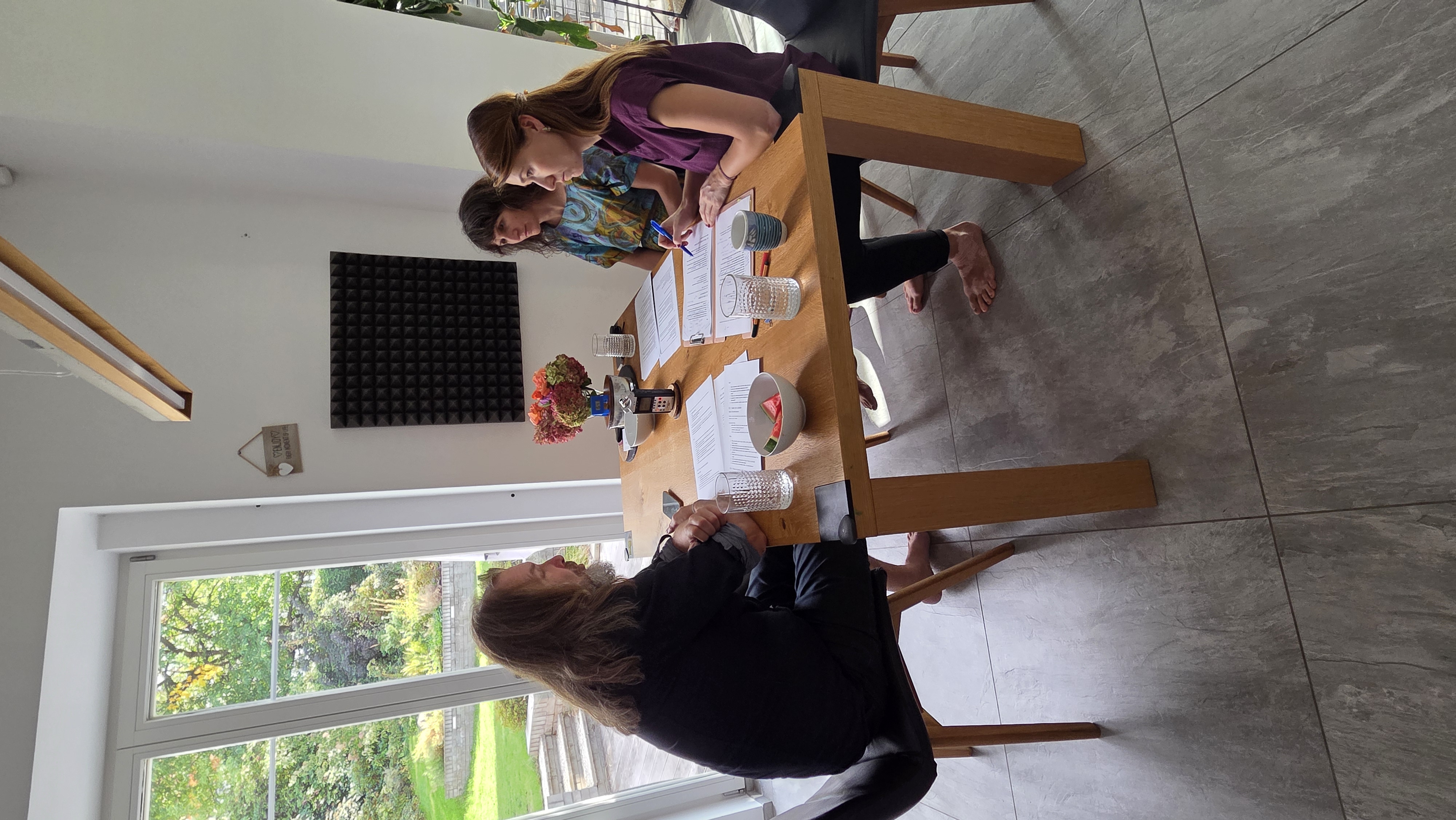
Before a teacher and mentor enter a classroom together, they need to discuss why they are doing it and what they expect from each other. Taťána and Tomáš describe the first steps: understanding the class’s needs, knowing what they can offer and agreeing on a shared goal. We also explore what that goal might look like in practice.
The conversation does not end with the agreement before the first lesson. Things happen in a classroom that cannot be planned. We discuss roles, how to complement each other and what teachers and mentors need to keep sharing along the way. Finally, they describe how they reflect on their lessons together.

Conversation transcript in English
Alice
Hi, and welcome to the Z Marsu podcast and its first series, Being a mentor at school. This time we're discussing Getting aligned before the start. Once again, you'll hear from Taťána Beránková Císařová, a teacher and education programme designer. Also at the table is Tomáš Vavrda, founder of Adaptivio, entrepreneur, visionary and innovator in education. I'm Alice Budová, and I'll be your host. I'm...
Collapse transcript
Alice
Hi, and welcome to the Z Marsu podcast and its first series, Being a mentor at school. This time we're discussing Getting aligned before the start. Once again, you'll hear from Taťána Beránková Císařová, a teacher and education programme designer. Also at the table is Tomáš Vavrda, founder of Adaptivio, entrepreneur, visionary and innovator in education. I'm Alice Budová, and I'll be your host. I'm a coach and facilitator for individuals and teams with multiple interests and talents. Together with Táňa and Tomáš, we're recording this podcast for anyone who mentors at school or is thinking about it.
Alice
Quick mentoring questions. Teacher and mentor: a duo whose strengths complement each other, or partners who are in tune?
Tomáš
Both.
Taťána
I'd say both too.
Alice
In mentoring, is the journey or the destination more important?
Taťána
The journey.
Tomáš
The journey, but it's good to set a destination. We don't necessarily have to reach it.
Alice
Does a mentor ever tread on a teacher's toes?
Taťána
All the time. It's good to agree on where my territory ends and the mentor's begins.
Tomáš
No comment.
Alice
A tandem parachute jump or a trust fall together?
Taťána
I see it more as the parachute.
Tomáš
Definitely a parachute jump. A friend is enough for a trust fall. I wouldn't just go on a parachute jump with any ordinary friend.
Alice
Okay.
Tomáš
For that, I need someone more experienced.
Taťána
Someone who knows the terrain?
Tomáš
Yes, but they need to know not only how to jump themselves, but how to do it with me. That doesn't follow automatically.
Alice
In the last episode, we explored the purpose of mentoring and what it brings to you and to us as mentors. Today we'll look more closely at the practical side of working alongside a teacher. Hi, Táňa, and hi, Tomáš.
Hi, Alice. Hi, Alice.
Alice
Let's get started. Táňa, how should a teacher and a mentor connect? What are the first steps? Does someone invite the other person for coffee? How should I picture it?
Taťána
Ideally, the mentor offers to help, because teachers often don't have time to find someone and explain everything. For example, mentors are available through JA Czech, as are entrepreneurs through the Můžeš podnikat programme. The teacher then chooses from a database.
Alice
I see, so you choose based on their profile.
Taťána
I can choose someone or describe the kind of profile I need, for example by the field they work in. I definitely recommend making contact before the first school visit. Ideally in person, but that isn't always possible, so at least by phone, or by email if necessary. As a teacher, I describe what I expect. If I don't do that myself, it's good for the mentor to ask. Not all teachers are used to it or have the capacity for it.
Taťána
‘This is who I am, and this is what I do. What would you need me for? What are you finding difficult? Which class would you like me to work with, and how often?’ It's good to agree with the teacher on a general intention for the term or even the whole year. Then agree specifically on the first visit: what its goal will be and what my role as mentor will involve.
Alice
Great. It sounds like a brief you might get in a workplace. There's a problem or situation I first need to understand. I bring curiosity and ask lots of questions.
Taťána
Exactly. I just wanted to point out that the teacher won't always take the initiative. They may be working with a mentor for the first time and have no experience of it. So there's no harm in reaching out first.
Alice
Great. Tomáš, how do you see it from your side? In practical terms, what should you clarify for yourself as a mentor before even setting foot in a school?
Tomáš
First of all, whether I'm willing to be up in time for a 7:30 start. Some mentors are shocked that it starts so early and can't understand it.
Alice
I must admit I'm quite shocked too that it starts at 7:30.
Tomáš
It starts at 7:30, everyone's got energy drinks on their desks, and off we go.
Tomáš
That's right. Established entrepreneurs in particular tend to be surprised when they discover the reality of secondary-school students' lives. Then there are practical things, such as whether you can park there. I might be there for one or two hours, but spend half a day travelling there and back and pay for parking as well. It sounds trivial, but over a longer collaboration that commitment of time and practical effort can weigh on you.
Tomáš
More seriously, though, and I may be repeating myself, the goal matters. If I don't know it at the beginning, I need to clarify it gradually. What's my purpose? What do I want to achieve there? Do I want to have an impact, help a teacher I know who can't manage alone, or bring particular expertise? Perhaps I understand a technology, enjoy it and want to explain it, promote it and show how great it is. Those are different approaches that affect what I do at school. Will it be short term, or might I become a more lasting part of the school? For some people, it even ends with leaving their profession and becoming a teacher. There are also programmes that help people from professional practice enter teaching.
Alice
It sounds like a two-way process. The school and teacher define the class's needs: what would benefit it, and what kind of experience, energy or personal profile would fit. At the same time, the mentor comes with their own ideas. I'm not sure ‘ambition’ is the right word, because it sounds a little like trying to push something through. But I really like what you said: ‘I have some expertise and I'd like to show it to the students.’ That feels different from going in to show off in front of someone.
Tomáš
That's certainly a more appropriate perspective for a mentor. I can still be a great mentor with ambitions of my own. But it may turn out that my main aim is to get a particular piece of work done. My role might then be valuable, but it won't necessarily be mentoring.
Alice
I'd like to return to the goal, which caught my attention. Tomáš, you've already outlined some possible directions. Táňa, from your experience, could you describe what such a goal might look like, so we can picture it more clearly?
Taťána
Tomáš and I gradually refined our longer-term goal. For me, it was for students to get as realistic a taste of entrepreneurship as possible. To run businesses themselves and do it the way it happens in real life. Based on that, we developed a methodology for giving them that experience and identified the points where it was better for me to step in and where it was better for Tomáš. That's our long-term intention, which we agreed on and which made sense to both of us.
Taťána
Then we break it down by month: what should happen and how far we'll get through the methodology. Next, we consider what should happen during a single double lesson, because that's how our teaching is organised. I then write out the goals of individual activities too. Tomáš and I don't discuss those as much; we trust each other on that. It's enough for us to know that on a particular day, for example, students should reflect on themselves, describe what they know about themselves and go out to test it in practice. At the next session, they might look for a problem, define it and again test it in the field. Another double lesson might aim to organise the children into teams.
Taťána
That's how specific our goals are. When working together, it's incredibly important to agree on the goal and both consider it important, even if only one of us proposed it. Then we monitor together whether we're moving towards it. Here I'm mainly talking about teaching together as a pair. That's a more advanced form of collaboration.
Taťána
If the teacher and mentor aren't teaching together, and the mentor comes for a visit where they work independently, they still need to agree on what should happen and what the teacher expects. The mentor can adjust the goal a little to match their capabilities and what's realistic. The important thing is that they agree. Without agreement between teacher and mentor, the teaching will feel confusing and fragmented to the children and won't have as much impact.
Tomáš
Unless the mentor takes over the reins and they actually swap: the teacher goes out into the corridor or for coffee, and the mentor leads the lesson. Then it may not connect smoothly, but at least the two approaches won't clash during the lesson.
Taťána
Of course, but even in that format, the goal is very important. The mentor leaves, while the teacher stays and builds on the visit. If they weren't in agreement, it would be wasted energy. You can't get that much done in a single or double lesson anyway. It's important for the teacher to build on what the mentor does or prepare the ground beforehand.
Alice
Great.
Tomáš
You already hinted that I had a particular approach, different from yours. Agreeing on the format was very important to me. I imagined it a little in the spirit of Cimrman, drawn from life: we'd be fully dressed, running for a train with suitcases. We were going to do entrepreneurship practically, as I'd experienced it and as I see it around me. If that hadn't been possible, if we hadn't agreed and you'd wanted more theory, I would have backed out.
Taťána
And I had to make it possible within the school too. These were fairly new, adventurous things that required certain arrangements. You couldn't have done them there without me.
Tomáš
True.
Alice
That's lovely to hear. It reminds me of working alongside another coach in team coaching. We come in with an agreed goal and some expectation or proposal for what might happen in each session. But then reality arrives. Something unexpected happens, or the students have fallen out. You have to respond flexibly. If I stuck only to my plan and came in to recite it, it might not land.
Alice
A big part of that is your ability to stay in tune as a pair, complement one another, respond to each other and assess the situation together. What would you recommend for establishing the relationship and your dynamic? That outdated good-cop, bad-cop concept came to mind. I'm sure others will think of it too: one person is strict and the other more lenient. Does it work that way, does it shift, or would you recommend something else? How do you set up the collaboration so it works?
Taťána
I think you start by agreeing on the content. I'm assuming the two people don't know each other and don't have much time to discover each other's strengths. We certainly started with the content and considered what would be more credible to students and what they'd respond to better. We found that Tomáš was better placed to encourage courage and resilience, because he'd been through it himself. If I'm sitting on a sofa saying, ‘Go out and fall flat on your face,’ it doesn't come across well. They know I'm a teacher, not a seasoned entrepreneur.
Taťána
I focus more on follow-through, even if it sounds stereotypical: ‘Come on, let's do the tasks; there's a point to them.’ I set boundaries because I'm part of the school. I organise the work; for example, I know who might struggle to work well together in a team. I also offer care when I see something isn't right. Visiting once a week, Tomáš has no chance of knowing everything. You say I sometimes care too much. That's my role.
Tomáš
That's your disposition.
Taťána
My disposition, yes.
Tomáš
Sometimes it's too much and sometimes it's just right. Just like mine.
Taťána
I'd also like to add that it isn't a split into the nice one and the nasty one. Tomáš encourages courage and challenges students to take on tasks, while I maintain the boundaries on the school's side so they keep up the pace. I'm consistent about that. At those moments, you're the more lenient one, and I'm the strict one keeping an eye on things.
Tomáš
This is where the earlier point matters: being aligned on the goal. Then we do what we're good at and what we can. When it works, it's great. Sometimes we take turns, sometimes we pull together, and sometimes we get in each other's way a little. Then we talk about it. In any case, we both have to know what the goal is and whether our actions are taking us towards it. Then we can ask, ‘Why did you do that?’ And I'll answer, ‘Because I thought it would help us reach the goal.’ ‘But it didn't work.’ ‘Okay, fair enough.’
Alice
I'm glad you're saying this. I think it's good to challenge the idea that one person has to be nice and the other nasty. It seems absurd to me. From life, relationships, and my work in coaching and facilitation, I see that consistency and a dependable structure don't make me mean. They can go hand in hand with great kindness and empathy. Those principles work together and create a sense of safety and certainty rather than fear. We know what's happening. I'm glad you see it that way too.
Taťána
Above all, I wouldn't shift that responsibility onto the mentor, because they don't have the scope to keep track of everything. That's the teacher's job. As a mentor, I wouldn't let myself be put into that role, because I don't think it works well.
Tomáš
On the other hand, there are situations involving courage that you wouldn't enter yourself. Suddenly, I'm the one who's better able to put myself in the student's shoes, understand what they're going through and show empathy. So in some activities, I may have the advantage in that respect too. Conversely, a teacher can be overprotective, hold the boundaries too tightly and undermine things a little.
Tomáš
But then I might arrive in the morning, see that everyone looks tired and say, ‘Come on, let's get going.’ And only afterwards find out that, for example, a classmate has died or something similar has happened. I remember when the war in Ukraine began. After several years of working together, I came into class expecting us to carry on as usual. Táňa took me aside and said, ‘It's affecting them deeply. It's being discussed here all the time. Everyone's afraid and doesn't know what will happen. You can really see it in the students. Be careful.’
Alice
It's so important that you're mentioning this. Again, I hear communication and staying in tune. It doesn't fit neatly into a chart; it's about being human. Always trying to consider what the other person should know so they can tune in properly and sense the mood in the classroom. It's quite an art, and good practice for everything else too.
Alice
I have one final question. Could you give an example of how you organise reflection and keep reviewing what works and what doesn't? What regular practice helps you fine-tune your collaboration and respond flexibly to what's happening in class?
Taťána
Shall I start? As we've said several times, we begin by setting a goal; otherwise, we'd have nothing to reflect on the teaching against. I then turn that goal into a plan for each double lesson. Sometimes it takes me ten minutes, longer for more complicated things. I send the plan to Tomáš, who reads it and comments if something doesn't make sense to him. These days he usually has few comments; there used to be more.
Taťána
So that takes you perhaps fifteen minutes a week.
Tomáš
Let me come back to that straight away. We used to go to a café after every lesson. We'd discuss what to do next time as well as what had just happened. Now I don't comment on the plan as much because we've been through it many times and it isn't necessary. I admit that sometimes I read the instructions on the tram on my way to the lesson. But when we're trying something new and neither of us knows what we're getting into, we work it through much more in advance.
Taťána
So we have a goal, a plan we agree on, and then we teach. Either we follow the plan or change it a little if something isn't working. After every double lesson, we discuss how it went, what we observed and what would be good to do next time. Sometimes the walk to the tram is enough. If the lesson was more complicated, we call each other or go for coffee and talk it through. It used to be an hour or two every fortnight. Now I'd put it at half an hour a week, because we have things more thoroughly thought through.
Tomáš
I'd also like to point out that we're designing an entire, fairly elaborate subject, so we work quite closely together.
Tomáš
When we invite a mentor from the Můžeš podnikat programme to school for just two hours, we send them a short briefing. It's great when they read it and arrive knowing the context. Just before we start, we take a minute or two to check our understanding and add any updates. We remind them that our students are working on a real project. Some student companies work on fictional projects, and reflecting on those is different from reflecting on a real attempt, where the journey matters most. We don't want mentors to jump straight into telling them how, in theory, they should do it better. The students know that, but they're trying out what's possible at that moment.
Tomáš
When someone comes only once or a few times, reflection doesn't have to be so involved either. Small things are enough: perhaps talk a little less or more next time, what worked for people and what didn't. But I definitely recommend preparation and a short wrap-up. Discuss whether I achieved my goal, or rather our goal, and, if we're meeting again, how to proceed.
Alice
Great. Thank you for the practical tips and for sharing your experience. We've reached the end of Getting aligned before the start. Next time we'll look at working with students and their motivation. Once we enter the classroom, how do we find our bearings? Thanks so much. Bye.
Bye. Bye. Thanks.
Alice
This podcast is brought to you by Adaptivio, a Czech company that helps businesses, schools and individuals change the world around them without waiting for permission. It connects business, technology and education, because good ideas rarely respect organisational boundaries. Instead of spending more time wondering whether something will work, it suggests giving it a try.